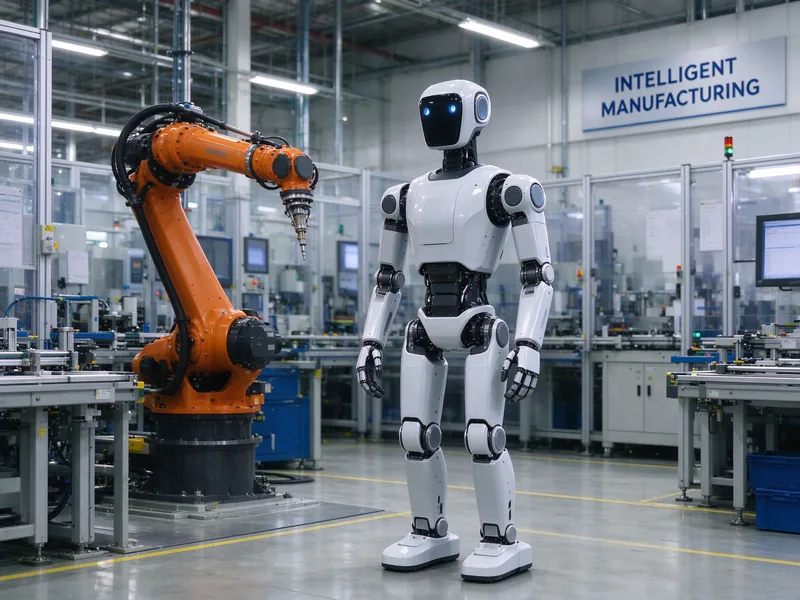
The quick answer: You can see how Shenzhen builds things as an individual, but you cannot simply walk into a real production line. Public showrooms and experience stores are open to anyone; deeper factory access needs an arranged host. Here are your realistic options, from free to fully arranged.
Before you book anything, know that the word "factory" is used loosely in Shenzhen. There are three different levels, and most visitors only ever reach the first.
Open to anyone with no appointment. You see finished products and live demonstrations, sometimes prototypes you can try, and you can buy things. They show what a company sells, but almost nothing about how it is made. Many "tech tours" consist entirely of these.
Some companies keep a separate showroom inside their headquarters for business guests rather than shoppers, with a wider range of products, technical displays and prototypes. Access means contacting the company in advance and being hosted by a specific department.
This is what most people actually mean by a factory – SMT lines placing components, PCB fabrication, robots being tested and engineers at work. These areas are never open to the public. They require a formal business introduction, visitor registration and sometimes NDAs, and depend entirely on the company's schedule.
If you want the production process rather than a product display, you need to aim deliberately at level three rather than assume a "factory experience" ticket will get you there.
You do not need to be a company or a large group, but the access path and the cost change with the level you want. Here is the overview, then the detail.
| Option | What you see | Cost for one person | Access |
|---|---|---|---|
| Public showrooms | Products and demos | Usually free | Walk-in |
| Paid workshops | Hands-on robot and maker experiences | ~US$100–400 per group | Walk-in, in store |
| Scheduled small-group | Hosted visits beyond the public floor | Shared group pricing | Book a seat |
| Arranged private visit | Company showrooms and, where possible, lines | Quoted as a service | Advance arrangement |
The easiest starting point needs no appointment and usually no money. You can browse working robots, drones and electronics with live demos and staff to explain them. For every location you can simply walk into, see our list of walk-in robot spots and the Huaqiangbei electronics market guide.
To go hands-on, experience stores let you operate a humanoid, guide a cobot arm, run a 3D print or join a maker workshop. These cost roughly US$100–400 per group, paid directly in the store rather than to us, and usually need no advance booking. See the humanoid robot experience for what is on offer.
One person can still join a scheduled small-group, so you do not have to form a company group or buy out a private tour. Sharing the host and transport brings the cost down, and a hosted group can go beyond the public floor depending on the itinerary. Seats depend on the departure schedule, such as the Nanshan future experience.
Even one or two people can ask us to arrange access through our local network. We will be honest about which company showrooms and production areas are realistic on your dates and set expectations before you commit. This is priced as an arrangement service rather than a cheap per-person ticket. For the deeper process and the kinds of companies involved, see the factory and robotics tour and our guide on how factory visits are arranged.
This is not a sales gate that a bigger payment opens on the spot. Real production floors have hard reasons for not accepting walk-in visitors:
Even a well-connected host cannot bypass this on the day, which is why starting early matters more than paying more at the last minute.
For the full step-by-step process behind deeper visits, our arrange a factory visit guide covers lead times and local channels in more detail, and the PCB and SMT guide explains what you would see on a production floor.
Yes, you can see how things are made, but not by walking into a production line. Public showrooms, experience stores and paid workshops are open to individual tourists with no company. Real production lines and R&D areas require a host to arrange access in advance.
You can visit public showrooms and experience stores alone. For anything beyond the public floor, one person can still join a scheduled small-group or ask us to arrange a single-traveller visit, though private arrangement is priced as a service rather than a per-person ticket.
Browsing public showrooms is usually free. Paid hands-on workshops and robot experiences cost roughly US$100–400 per group in the store. Joining a scheduled small-group or arranging a private visit costs more depending on duration and transport; contact us for a single-traveller quote.
Public showrooms and flagship stores accept walk-ins. Company showrooms and production areas are not open to walk-in visitors and need advance arrangement, ideally several days to 1–2 weeks ahead depending on the company.
Finished products and live demonstrations, sometimes prototypes you can try, and staff on hand to explain. It shows what a company makes, but not how it is assembled; for the production process you need an arranged visit.
No. A store labelled factory experience is usually a public showroom in a mall or street, not a production facility. Confirm in writing whether a visit includes a real production line before you pay, since the word factory is used loosely.
Public showrooms and workshops are family-friendly and air-conditioned. Real production floors have age and safety rules set by each company, so tell us the ages and we will confirm what is possible.
Not for public showrooms, which often have English materials. Deeper visits are mostly hosted in Chinese, so an English-speaking host or interpreter lets you ask technical questions rather than just look around.
Tell us your dates and whether you are solo or two people, and we will say what is realistic.
Ask on WhatsApp Tech