Electronics Market

Huaqiangbei: Inside the World's Biggest Electronics Market

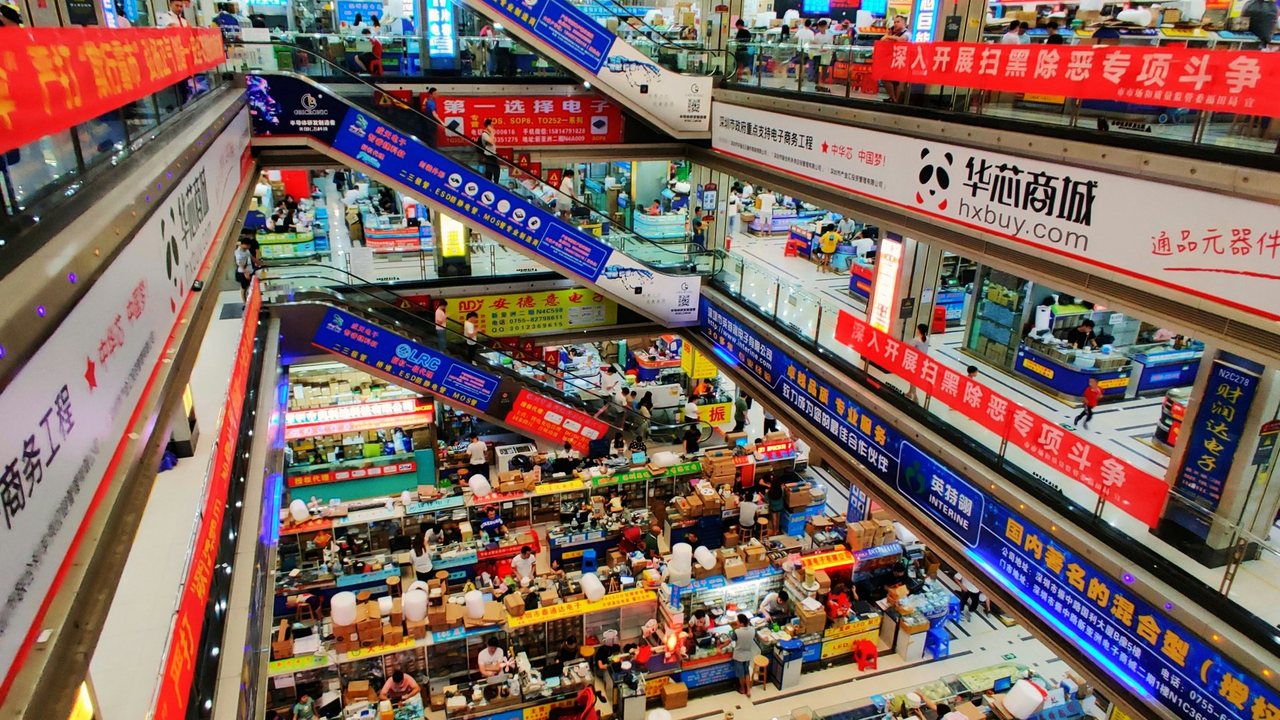
Inside Huaqiangbei electronics market Shenzhen

What Huaqiangbei actually is

Huaqiangbei is a roughly one-square-kilometre stretch of Futian district, around Huaqiang Road and Shennan Boulevard, that has become the densest electronics trading hub on Earth. It isn't a single shop or even a single mall: it's a cluster of tall buildings, each filled floor by floor with stalls, and each floor tends to specialise in one category of product.

You can buy one resistor over the counter in the morning and arrange for tens of thousands of finished devices to be built and shipped by the end of the week. That range — from a single component to a manufactured product — is what makes the place unlike anywhere else.

The four waves that built it

Huaqiangbei keeps reinventing itself, and each era created a new generation of fortunes.

  • Wave 1 — the 2000s, knockoff phones. The "shanzhai" handset era made Shenzhen famous. Millions of feature phones and clones flowed out of these stalls to the whole world.
  • Wave 2 — around 2013–2017, Bitcoin mining. Miners, power supplies and rigs — including Bitmain Antminers — were traded here as cryptocurrency took off.
  • Wave 3 — 2020–2022, the chip shortage. Memory, modules and hard-to-find components changed hands at premium prices as global supply chains seized up.
  • Wave 4 — today, robots and AI. Robot dogs, humanoids, drones, smart hardware and EV parts now share the counters with classic components.

What you can actually buy

  • Components: resistors, capacitors, connectors, cables, LEDs, sensors, switches, relays and modules — including Arduino, ESP32 and Raspberry Pi accessories.
  • Phones and accessories: cases, chargers, cables, earbuds, screen protectors, power banks and handsets.
  • Drones and robotics: drones and parts, robot vacuums, robot dogs, humanoid robots and smart-home gadgets.
  • Mobility: e-bikes, scooters and EV-related parts.
  • Tools: soldering stations, multimeters, oscilloscopes, 3D printers (including Bambu Lab) and laser equipment.
  • Manufacturing services: custom PCBs, PCBA, small-batch assembly, packaging and export.

Which buildings to enter

The names are in Chinese, but the categories are predictable:

  • SEG Plaza and the SEG electronics markets (赛格) — a huge range of active and passive components.
  • Huaqiang Electronics World (华强电子世界, multiple blocks) — broad mix of components and finished goods, with newer robotics and AI hardware.
  • Duhui, Manha and Taipingyang markets (都会电子城, 曼哈数码, 太平洋安防) — digital goods, accessories and security electronics.
  • The communications markets and the back towers — handsets, networking and, upstairs, sourcing and trading companies.

Start from the Huaqiang Road / Huaqiangbei metro stations (Lines 1, 2 and 7). A simple rule of thumb: the lower floors lean toward finished goods and retail, the upper floors toward wholesale and components, and the office towers behind the malls house trading companies and sourcing agents. Categories cluster together, so once you find the right floor you'll find a dozen stalls selling the same thing.

Bargaining and ordering

For single retail items, prices are close to the marked price and haggling only moves them a little. Wholesale prices fall sharply as quantity rises. If you're bundling several items, buying them at one stall gives you room to negotiate. For anything more than an over-the-counter purchase, get the quote in writing or in a WeChat message, and check the goods before you leave — many warranties are shop-level exchanges rather than manufacturer warranties.

From one unit to a million

Huaqiangbei sits in the middle of the Pearl River Delta supply chain. Within about a kilometre — and a short trip to nearby Dongguan or the Guanlan area — you can source PCBs, components, assembly and packaging. Trading companies on the upper floors handle export, minimum order quantities and freight. For a real product, treat it as proper business: contracts, NDAs, clear specifications and independent quality control matter, and certifications such as CE or FCC are usually your responsibility, not the factory's.

Tips and what to watch for

  • Test electronics before buying and keep the receipt.
  • Ask the grade of "branded" goods — original (原装) versus assembled (组装) are very different.
  • It's crowded; keep bags and pockets secure.
  • Weekdays are best for finding suppliers and sourcing offices; weekends are busier with retail.
  • If you're a tourist, it's also one of the most photogenic places in the city — go upstairs and look down.

The fastest way in is with someone who already knows which floor, which stall and which supplier you need — and can translate the technical terms.

Explore Huaqiangbei with an English guide

Our 4.5-hour and full-day tours include a guided Huaqiangbei walk: we find the right floors, help you bargain and source, and translate every step.

Plan My Huaqiangbei Visit Email Us

WhatsApp Email