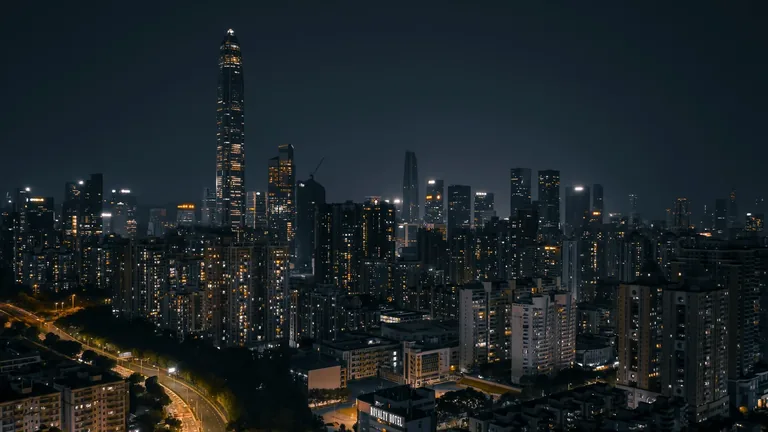
The quick answer: Beyond the electronics markets, Shenzhen is a green waterfront city with a genuinely dramatic night skyline. In one private day-and-night you can ride up the Ping An tower, watch the Civic Center light up, walk Shenzhen Bay and finish in a local restaurant or a lively bar — with an English-speaking host who handles the transport, the apps and the reservations.
Most visitors arrive expecting only factories and electronics. The surprise is the city itself. In a few decades Shenzhen grew from a small border town into one of the largest, youngest and most deliberately modern cities in China, and it keeps the evidence in plain sight: two clusters of glass skyscrapers, kilometres of seaside promenade, hills that open straight onto the central business district, and old streets sitting beside brand-new development.
The city is easy to like physically. It is unusually green, the metro is clean and extensive, and the districts have distinct characters — the government-and-finance order of Futian, the tech campuses and waterfront of Nanshan, the older trade streets of Luohu. You do not need a special interest in gadgets to enjoy a day here; the architecture and the evening light are the attraction.
There is no single viewpoint. The best views are spread across the two central districts, and most are free. These are the ones we actually take guests to:
Yes. The Free Sky observation deck sits above 500 metres in a tower close to 600 metres tall — one of the highest buildings in the world. You look across the Futian grid, the hills and the bay, and on clear evenings you can watch the city switch from daylight to lights. It needs a separate ticket, roughly US$15–20, and the sunset time slots fill first. We confirm the slot, get the tickets and take you there, so you do not have to work the Chinese booking app or queue blindly.
Clean, bright and very orderly. The Civic Center and the surrounding government buildings are lit in a controlled, low-glare way rather than in clutter, and the glass towers reflect each other across wide avenues. The waterfronts and park paths stay open and busy with runners, families and people walking dogs. For the neon, head to Huaqiangbei, where the electronics aisles glow under pink and green tubes — the same energy as the markets, but at night it becomes a sight in itself. If you want to see that side, our Huaqiangbei guide explains how the area works.
It is not a party destination in the Bangkok or Hong Kong sense, but the evening scene is real and surprisingly varied. Each area has its own crowd:
For dinner, the kitchen is Cantonese and clearly made for eating well: fresh seafood, Cantonese dim sum and roast meats, Chaoshan beef hotpot, Hakka dishes and plenty of late-night congee and noodles. We pick the place to your taste, book the table and translate the Chinese menu — no tourist set meals, no dishes chosen for photos rather than flavour.
The non-tech side has more depth than the skyline suggests. These are the spots worth an hour or two:
Yes, and this is the part most asked about in the enquiries we receive. A single TechVoyage team coordinates the whole visit — the technology showrooms and robotaxi, the Huaqiangbei shopping, the architecture and night views, the dinner and the bars — and brings in a specialist guide for a particular part where it genuinely helps. You deal with one company, get one private plan and one car, and keep the flexibility to change the schedule as you go.
That is the difference between a fixed tourist package and a hosted trip: the value is the local knowledge, the relationships and the access, not a printed route. If you want to understand how the private hosting works, see our private guide page; for the technology half, start with the Nanshan and Futian routes. Business visitors wanting deeper access can look at the Factory & Robotics Tour.
The usual rhythm is a late-afternoon start to catch the light: a viewpoint or the observation deck first, sunset from a hill or the waterfront, then a local dinner, and finally the lit skyline, a show or a bar before we drive you back to your hotel. It also fits neatly after a half-day tech tour, with a break between the two. Your English host and private transport are included; entrance tickets, food and drinks are paid as they happen and agreed in advance, so there are no surprise costs. We can shape the same plan for a couple, a family or a group of friends travelling together.
Yes. The central districts, waterfronts, bar streets and metro are well lit, busy and generally very safe late into the evening, including for solo travellers and couples.
Not with us. Your English-speaking host handles reservations, menus, tickets and transport, and explains the architecture and the food as you go.
Your host, planning and transport are included. The Ping An Free Sky deck needs its own ticket (roughly US$15–20), which we help arrange; Lianhua Mountain and the Shenzhen Bay waterfront are free.
Yes. A day-and-night works well after a half-day tech route or as a standalone. One company coordinates the technology, sightseeing, dinner and nightlife.
We do not include helicopter flights as a standard product and cannot promise availability. We can discuss it on request and confirm what is actually bookable before you travel.
Private half-day tech tours start at US$160 per group. Evening and full day-and-night plans are quoted to your interests, group size and transport — message us for a tailored quote rather than a fixed package price.
Send us your dates and what you enjoy — views, food, bars, culture — and we'll reply with a tailored itinerary and a clear quote.
Plan My Day & Night Email UsWritten by Charles, founder of TechVoyage Tours · Updated November 2026
 Tech